
Most homes are built for the immediate needs of today.
But the reality is, the way we continue to develop neighborhoods will shape how land is used for the next 50–100 years.
As the climate changes, farmland disappears, and development continues to spread outward, more people are starting to ask a different question:
What kind of future does my home actually support?
For many buyers, the idea of “home” is shifting towards how a place will be able to support a more sustainable, resilient, and grounded way of living.
That is part of why more people are exploring cohousing.
What is Cohousing?
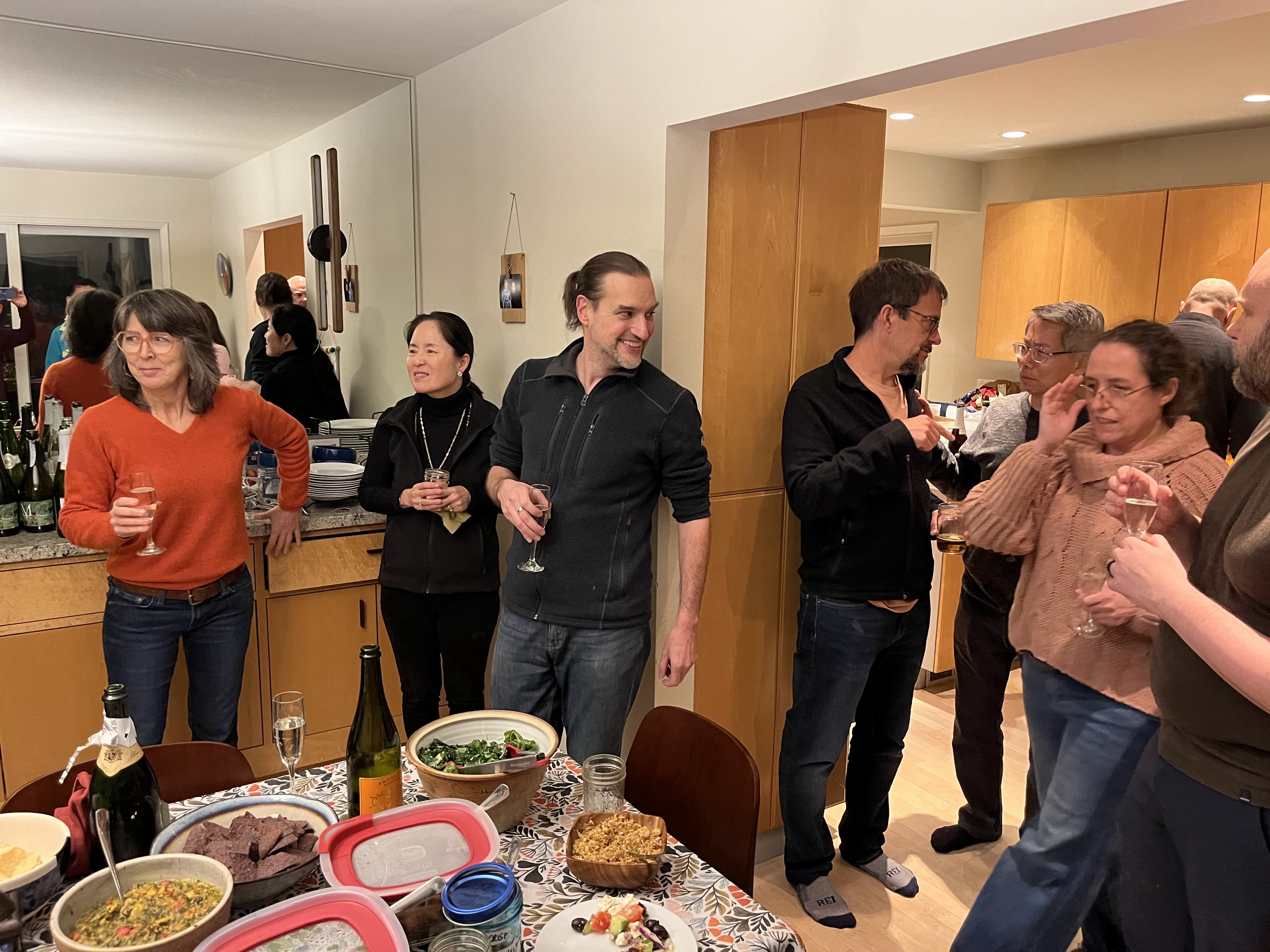
Cohousing is an intentional neighborhood model built around private homes, shared spaces, and a layout designed to make community connection easier.
In a cohousing community, people own their own homes but live in a neighborhood that makes it easier to know their neighbors, share resources, and take part in community life — while still maintaining privacy.
If you are brand new to cohousing, we have a Full Guide to Learn More About How Cohousing Works and why people choose it.
How Cohousing Supports Sustainability
Cohousing can support a more sustainable way of living by making lower-impact habits easier to practice.
When people live in closer proximity and share resources, it becomes easier to reduce waste, lower energy use, and rely less on constant consumption.
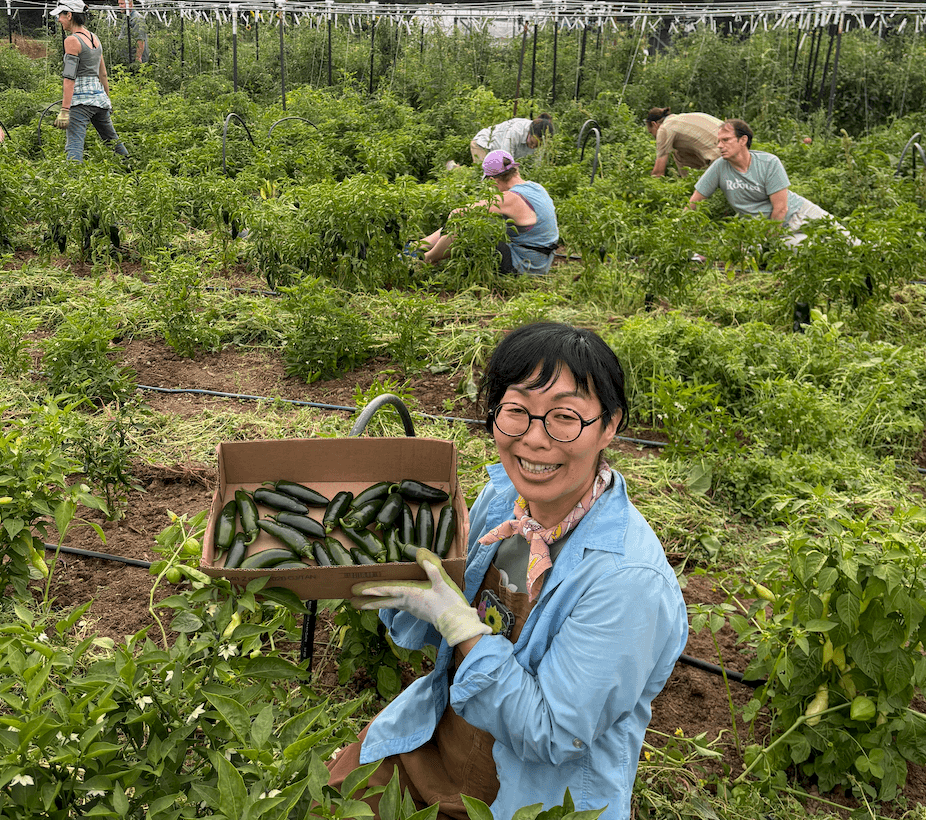
In practical terms, that might look like borrowing tools instead of buying them, carpooling, caring for shared gardens, or supporting local food systems.
Research on cohousing has found that people living in these types of communities use nearly 60% less energy in the home, and shared meals use about 33% less energy per person than cooking individually.
Why This Matters Now
The way we design neighborhoods has long-term consequences.
Conventional development patterns often separate homes from the systems that support life.
Land is divided, homes are spread out, and the surrounding landscape is treated as leftover space rather than something to be used or cared for intentionally.
Over time, this leads to a loss of productive land, increased sprawl, and fewer opportunities to build systems that support sustainability at a local level.
But even with better design, many communities still struggle with one key issue:
Productive land is still lost or underutilized.
In other words, a community development may preserve space without fully preserving its long-term agricultural or ecological value.
Rooted Northwest was founded to respond directly to this challenge.
How Rooted Northwest is Making a Difference
Rooted Northwest began with a commitment to protect local farmland in a region facing increasing development pressure.
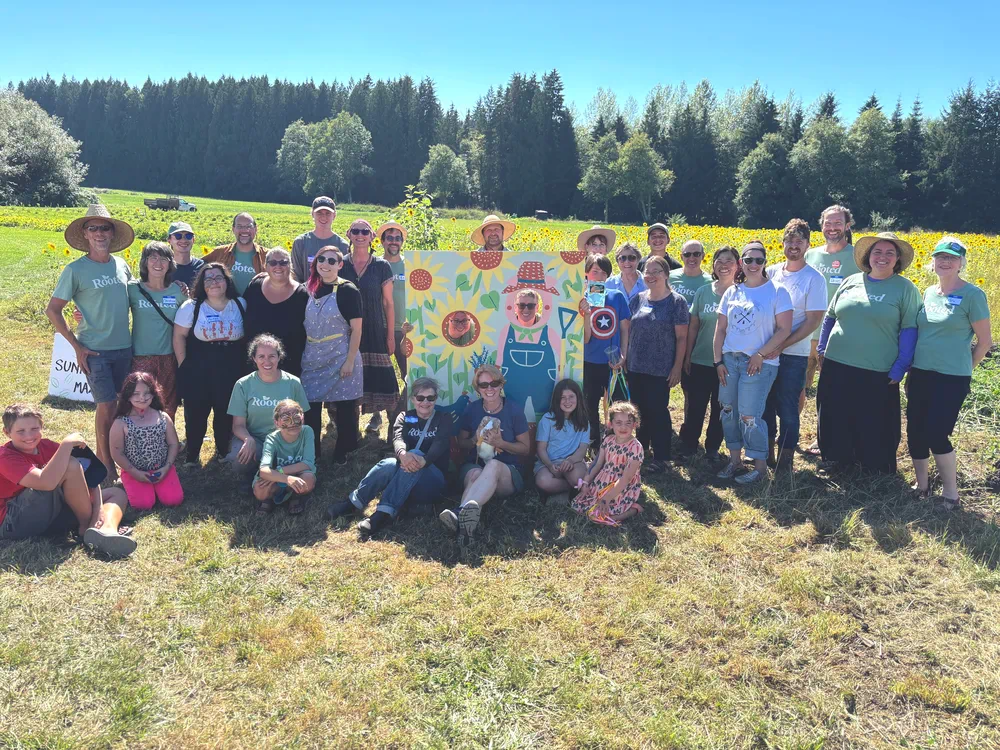
Through a collective effort, our community’s founders purchased a former family farm to design a village model that placed homes in centralized clusters, rather than spreading development across the land.
This approach allowed more than 85 percent of this 240-acre property to be permanently preserved as farmland, forest, and open space.
In typical rural development, land is divided into residential parcels, often leaving little room for functional agriculture.
At Rooted Northwest, the goal was not just to preserve land, but to keep it productive, connected, and usable over time.
Read More About Our Land and how we are preserving it for the future.
Living in a Way That Reflects Your Values
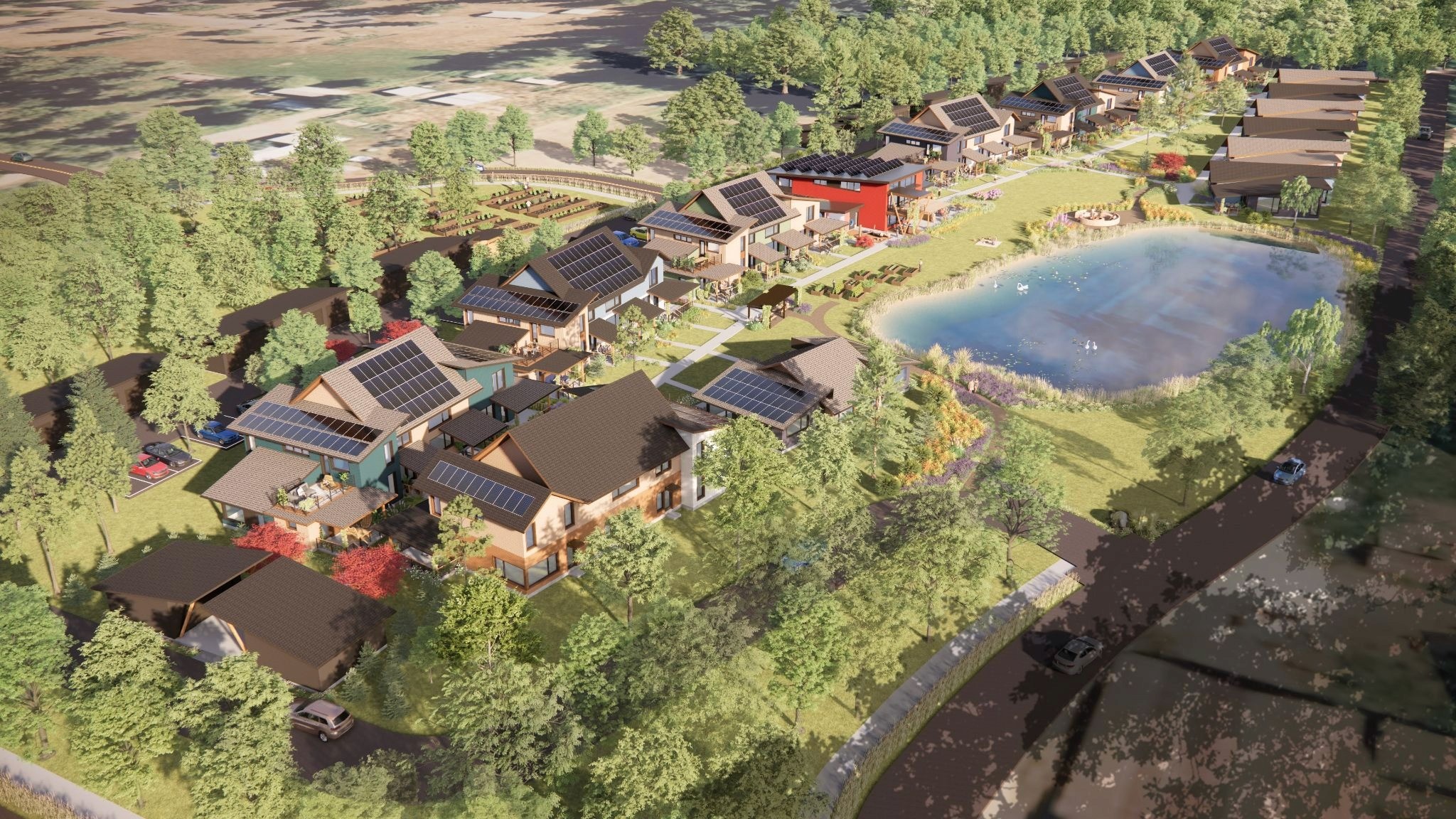
At Rooted Northwest, sustainability shows up in how the community is designed and lived in.
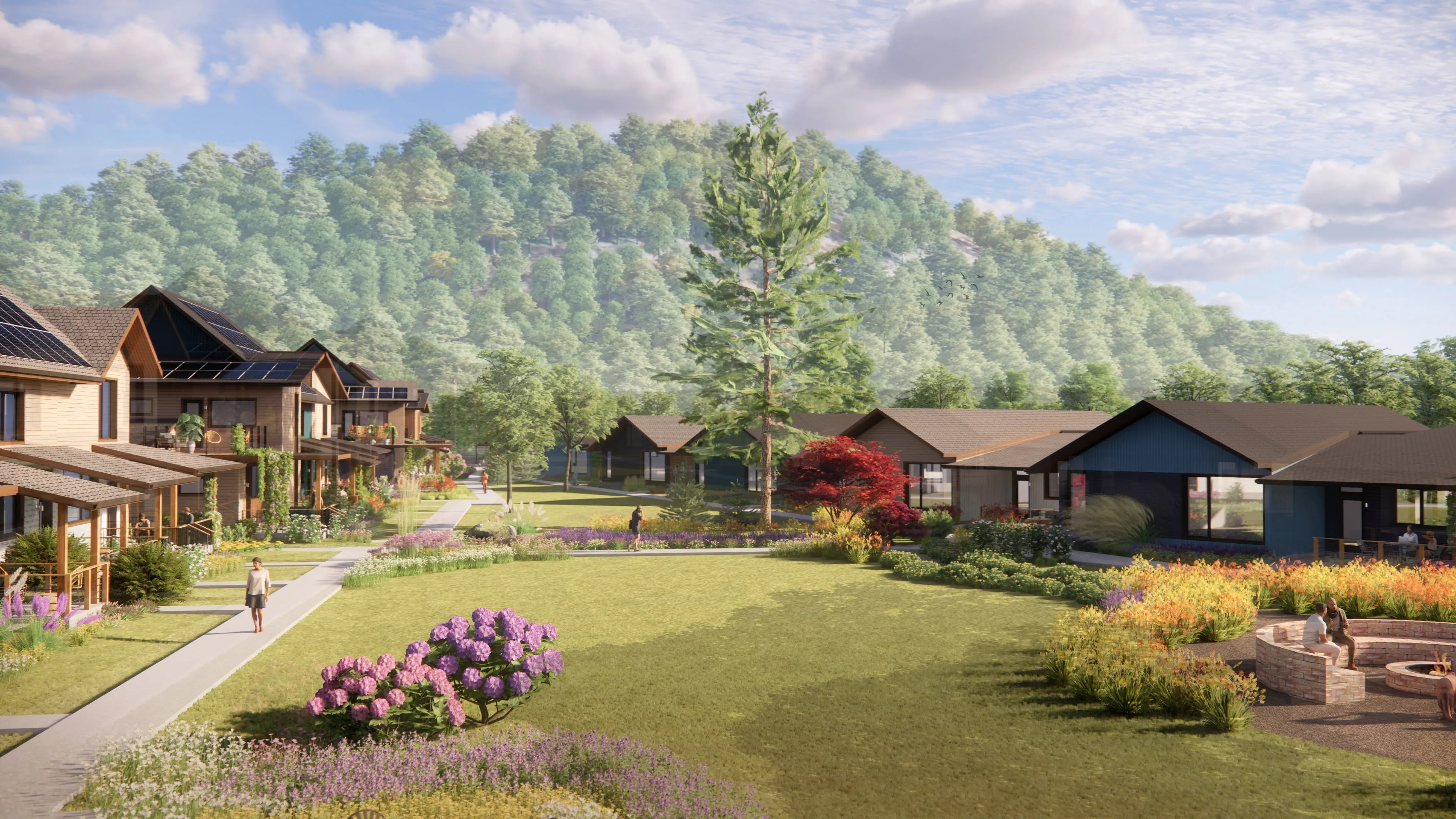
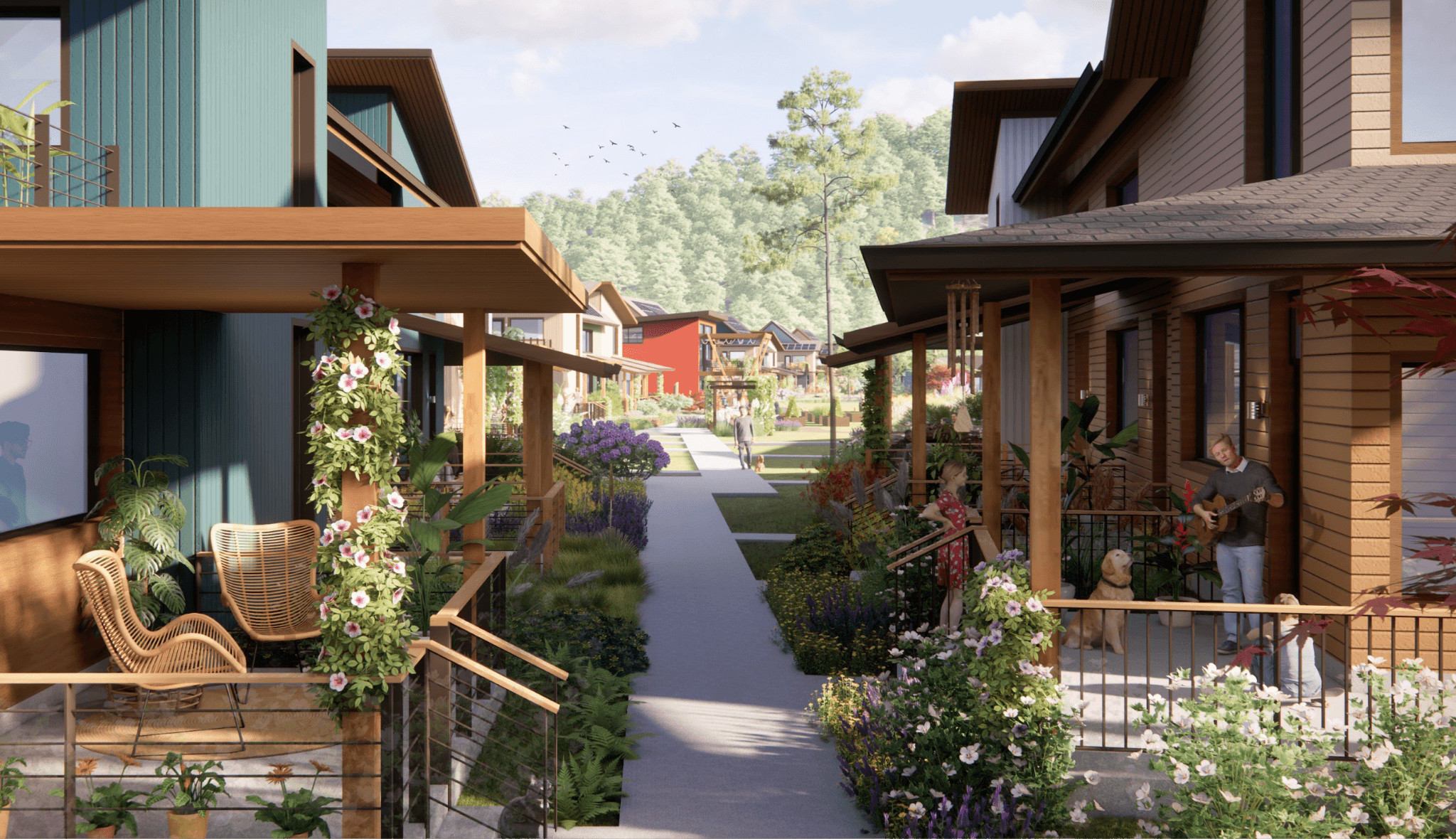
The village is arranged as a walkable neighborhood where privately owned homes are arranged around shared green spaces and connected by paths and trails.
This makes it easier to move through the community on foot, spend time outdoors, and access shared spaces and resources as part of daily life.
The homes themselves are green-built and energy efficient, with high-performance insulation, solar-oriented design, and siting that reduces energy use and environmental impact.
What takes shape is a place that feels settled, cared for, and rooted in environmental values.
See Inside Our Village to see how Rooted Northwest brings this vision to life.
How Cohousing Makes Community Easier
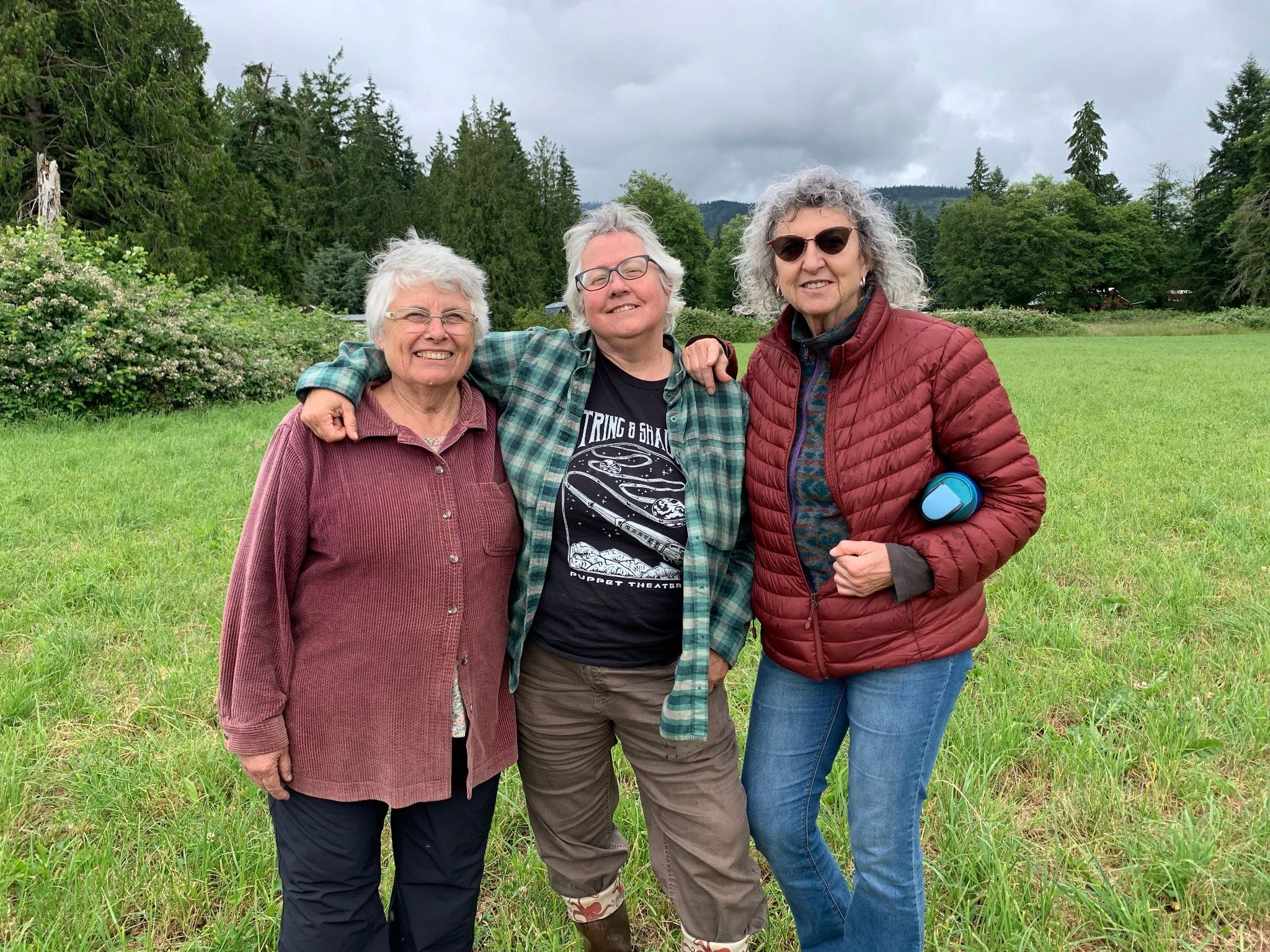
Living at Rooted Northwest can make daily life feel more connected and supported.
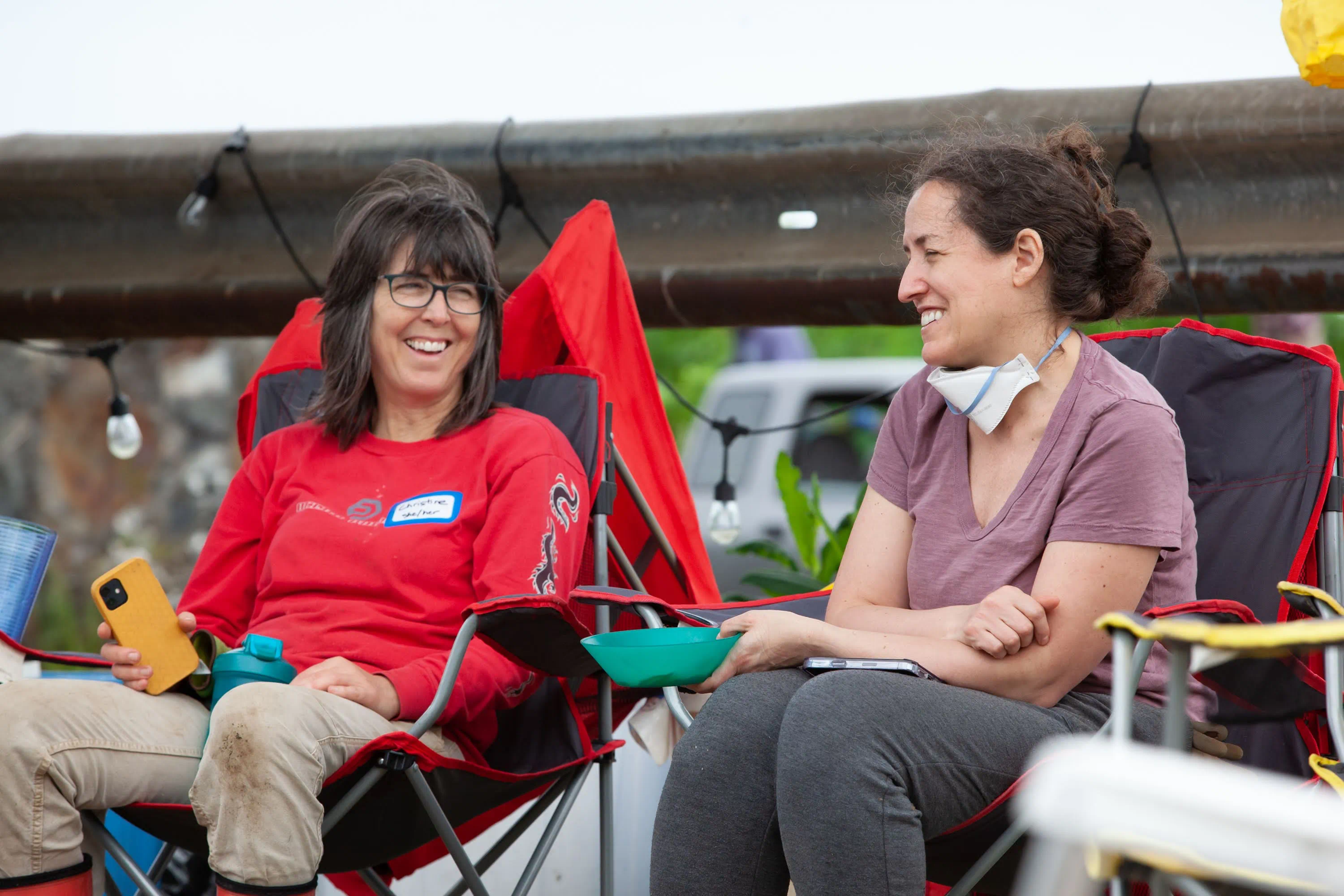
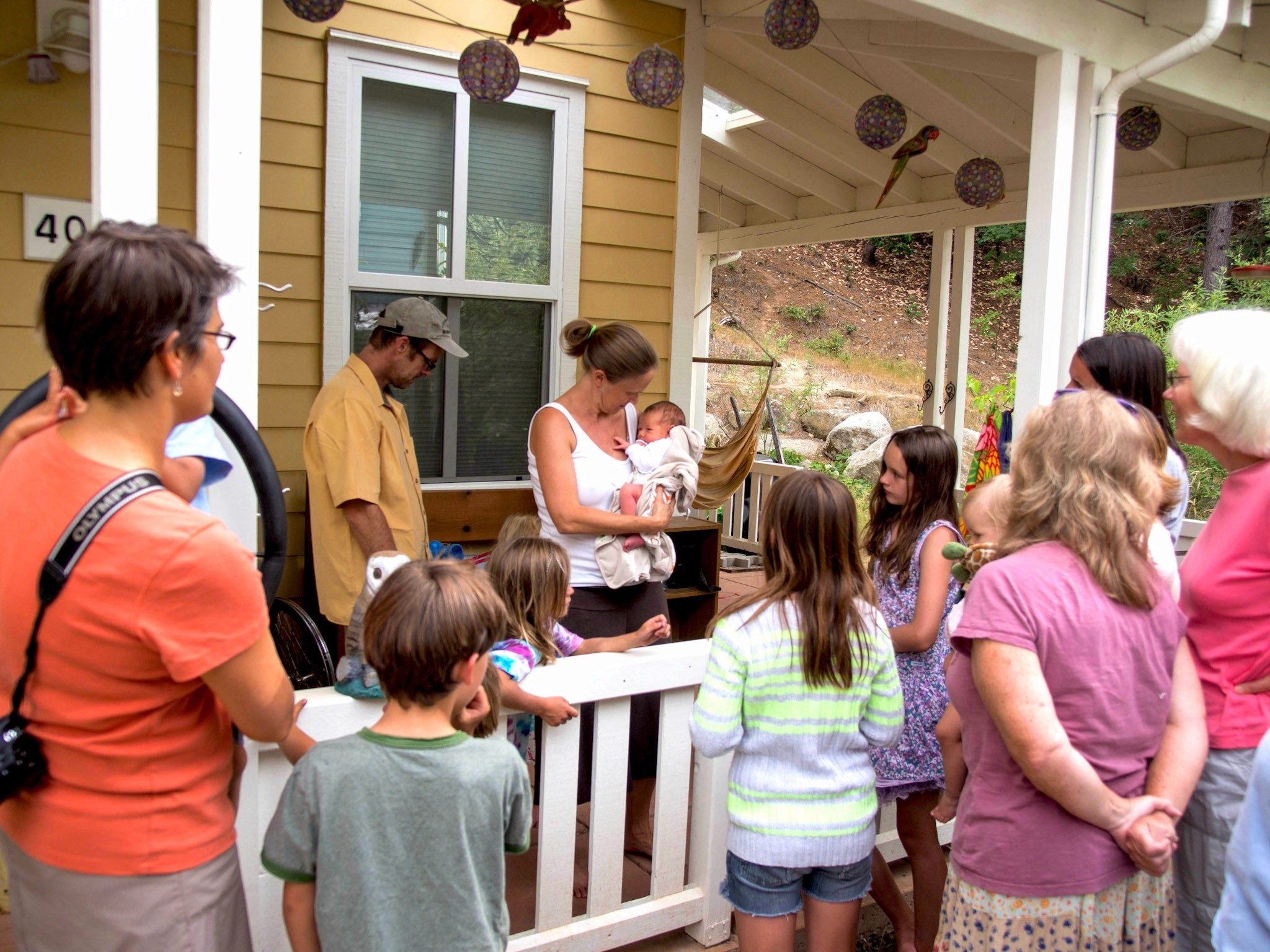
In our cohousing neighborhood, it’s easier to know your neighbors, ask for a hand, or simply have people nearby who know you. Those kinds of relationships can make life feel less isolated and more grounded.
For families, it can also mean children growing up with more freedom to play safely outside, more familiar faces, and a wider circle of trusted adults over time.
Living here does not mean giving up privacy. It means living in a place where connection is easier because the neighborhood is designed for it.
Homes are privately owned and self-contained, while shared spaces are intentionally placed throughout the village so interactions can happen naturally.
For many people, that balance of independence and community is part of what makes Rooted Northwest so appealing.
Look at Life Inside Rooted Northwest to see what daily life looks like inside our community.
A Home that Supports a Better Future
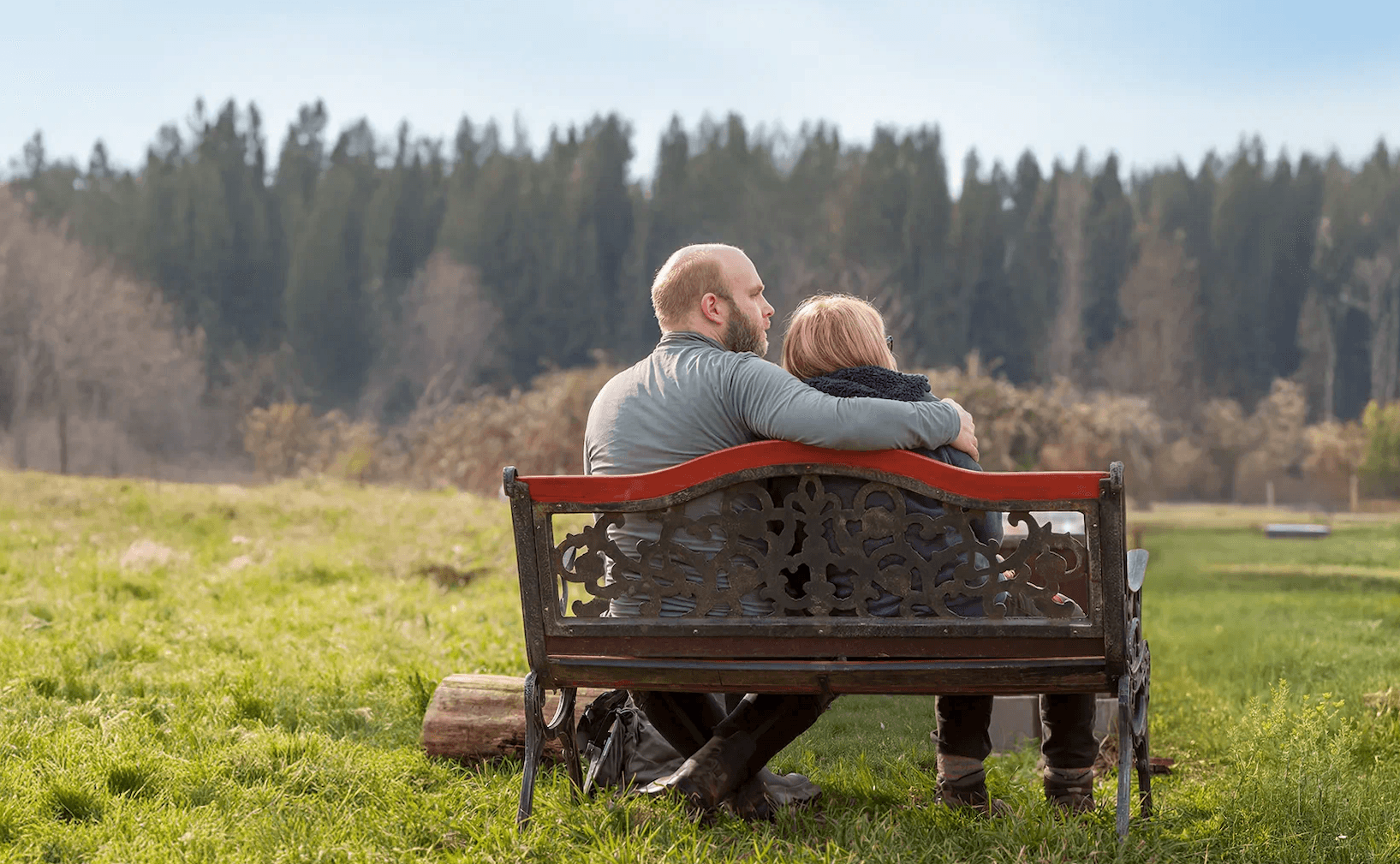
For some buyers, home is no longer only about the house itself.
It is about whether a place supports the future they want to be part of.
At Rooted Northwest, that means a home that supports meaningful connection, environmental responsibility, and a stronger sense of belonging.
In our village, lower-impact living is built into the layout of the neighborhood itself.
For many people, that is what makes Rooted Northwest worth exploring.
If this sounds like the kind of future you are looking for, Join an Information Session to see if Rooted Northwest is right for you.